From trionfi to the tavern: how tarok reached us
The cards you hold tonight have a longer pedigree than many a noble family. This is their road: across the Alps, through the centuries, to your table.
Born among the trionfi
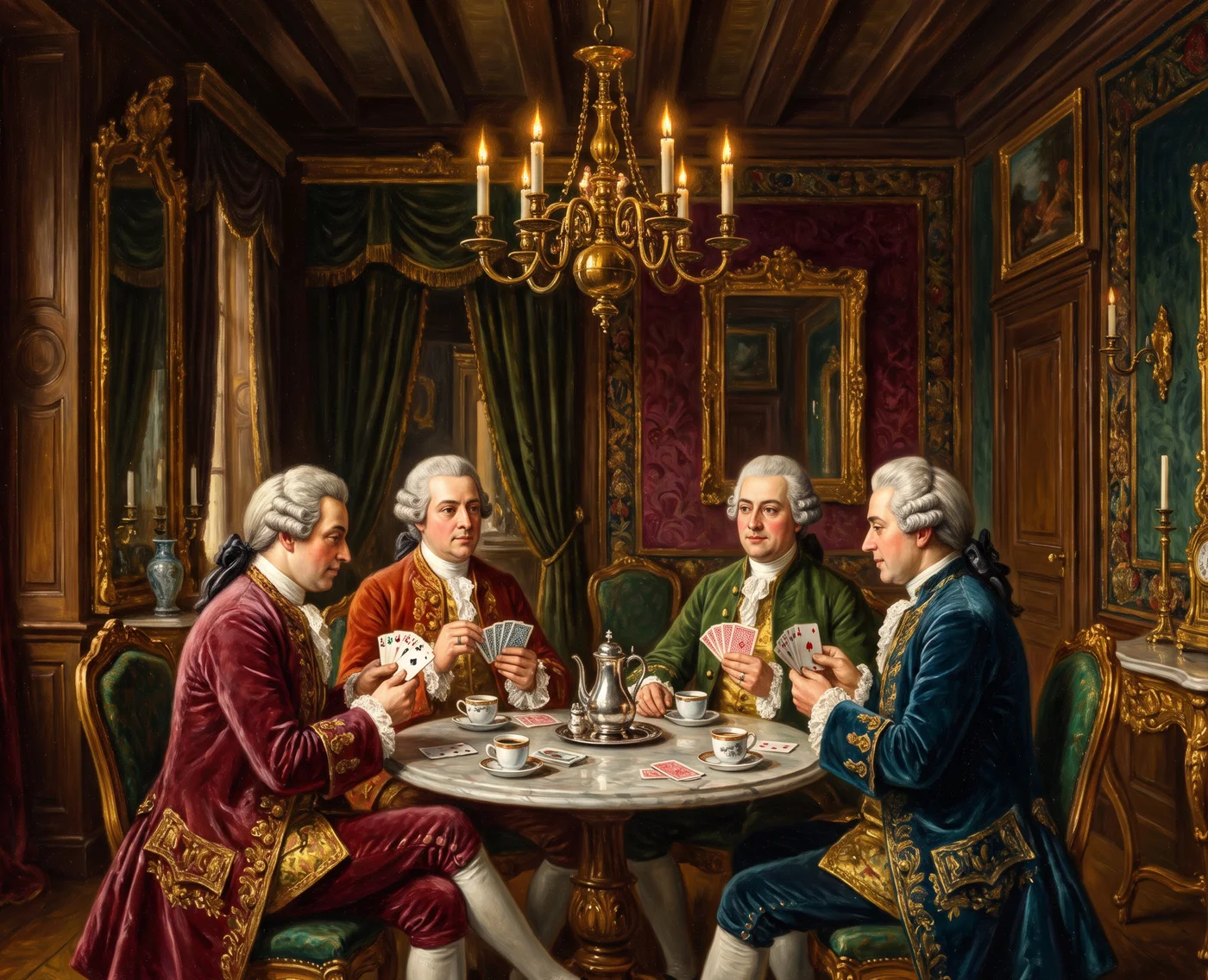
In the first half of the fifteenth century, at the courts of northern Italy, in Milan, Ferrara and Bologna, a novelty appears: to the playing cards a special set of images is added that beats all others. They called them carte da trionfi, cards of triumph. From trionfi we got our trumps, and from the games played with them a whole family of games we now call tarok.
The first decks were luxury itself: hand-painted, gilded, commissioned for weddings and court feasts. Only print brought them to the people, and the people never let go.
The road across the Alps
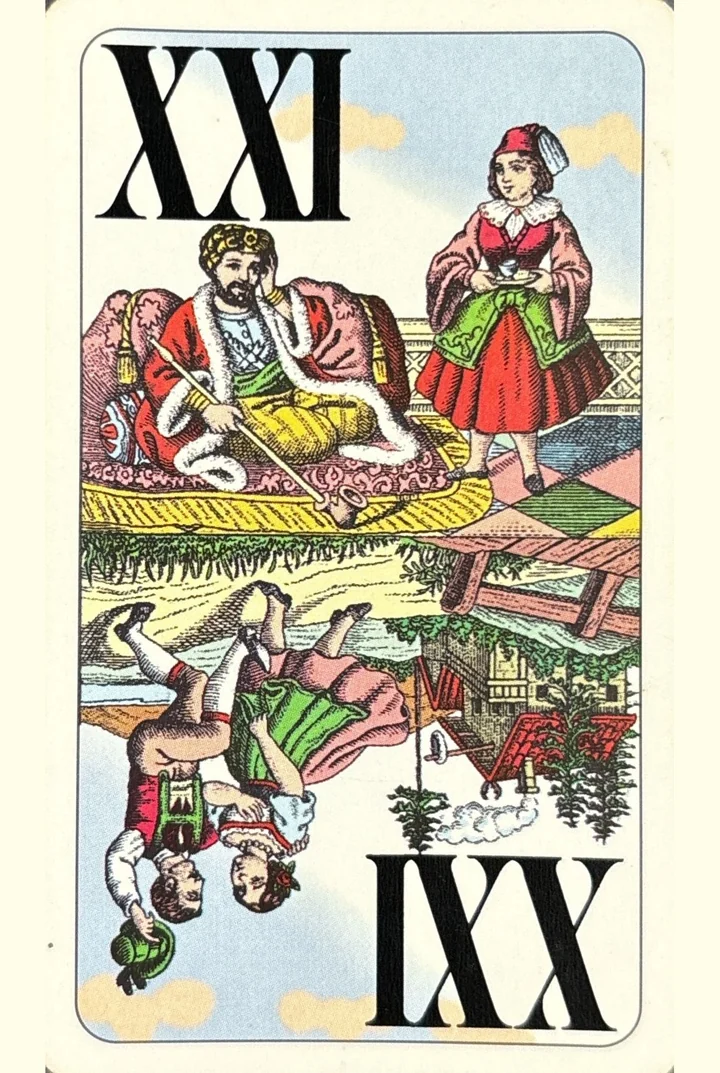
From Italy the game spreads to France and to the German-speaking lands (Tarock). In the Habsburg monarchy of the eighteenth and nineteenth centuries tarok becomes a true social institution, played in Vienna's coffee houses, in garrisons and taverns, from Bohemia to Croatia. From that world comes the card pattern Slovenian players still know today: Industrie und Glück, "industry and fortune", with genre scenes on the trumps and the inscription on trump II. Viennese printers produced it, among them the famous Piatnik.
For play in our lands a deck of 54 cards settled in: 22 trumps and 32 suit cards. That deck, and the rules that grew around it, is what we now call Slovenian tarok.
And fortune-telling?
Here is the surprise for many: tarok was first and foremost a game. Mystical meanings were attached to the cards only by French occultists at the end of the eighteenth century, three centuries after the Italians had been merrily winning tricks with them. The Slovenian table never had much to do with divination: here a card does not foretell your fate, at most it decides who buys the next round.
The Slovenian table
Tarok reached us along Habsburg roads and rooted deeper than almost anywhere else. It grew up in taverns and coffee houses, wintered in student rooms, passed from grandfathers to grandchildren, together with its language: štih, talon, kontra, berač, radelc. Today it ranks among the games Slovenians take most seriously: with rules every table defends, and grudges that last until the next klop.
That story is also why Tarok 124 takes the tradition seriously: real rules, cards that respect the originals, and a table worth sitting down at.
Sources & reading
History is best learned at the table
Carry the tradition on.
The first game is on the house: no sign-up.
✦ click a card to flip it ✦